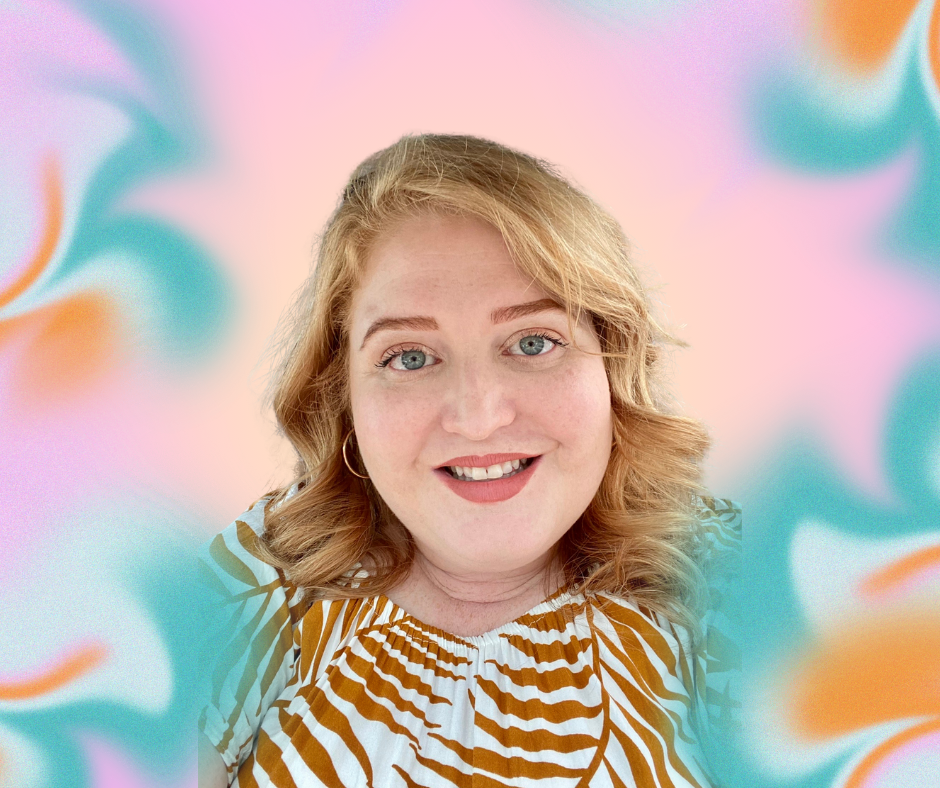
On a March afternoon, I meet Mrs. Rachel Snow-Fornari on Zoom. Though she and her students are busy preparing for their spring musical, The Little Mermaid, she generously takes an after-school break to chat with me.
Snow-Fornari is one of my favorite actors from Lizzie McGuire. She portrayed recurring character Veruca Albano, a redheaded Mathlete with a flair for vintage fashion. The actor was also in Matilda and Hope Floats, along with Friends, Curb Your Enthusiasm, Touched by an Angel, George Lopez, and One on One. Show business was more than an occupation, but also a piece of family history: Snow-Fornari’s grandmother, Ann Howard, was an actress in over 75 movies, the Los Angeles Times reported, such as Angels with Dirty Faces (1938), Great Expectations (1934), and The Little Princess (1939).
Snow-Fornari has plentiful stories from growing up in California and being in the industry. There was the era when Shia LaBeouf teased her at synagogue, as they were in Sunday School together.
While working on Hope Floats, Harry Connick Jr. entertained young Rachel Snow and Mae West. Snow-Fornari calls him a “dad guy” because “he clearly loved being around kids.” She remembers a piggyback ride as well as golf cart ride “doing the fastest donuts that he could do around the RV village. And all of us clinging to the golf cart for dear life so we don’t go flying out of the golf cart. But of course, giggling and having a great time.”
Then there was her “weirdest audition” as a teen. “I got sent out for a tampon commercial that never saw airwaves,” she begins. “They wanted all of the people auditioning to dance wildly and with abandon to the rock song ‘Hot Blooded.’ And I did. I danced so hard, my glasses flew right off my face.”
We chat at length about Disney Channel. This includes the kids’ TV phenomenon of actors being instructed to “touch gross cold food,” like Snow-Fornari “having to shove my hand into a bunch of cold haggis that had been sitting out all day” in Lizzie McGuire’s “The Greatest Crush of All.”
Now, Snow-Fornari brings her extensive stage and screen experience to her role as a drama and technical theater teacher in the Los Angeles area. Folks in Southern California can purchase tickets here to her department’s upcoming production of The Little Mermaid. Donations from readers anywhere are also welcome. The show opens Friday, April 19, and runs for two weekends!
Enjoy my conversation with Rachel Snow-Fornari! This interview has been edited for length and clarity.
I always love seeing you on Lizzie McGuire, one of my favorite shows of my whole life. We meet Veruca as a Mathlete with a great hairdo of braids.
It was a style, it was a style…
I didn’t love the hairstyle, but you were there to do a job. You got hired to do a job, and you kind of suck it up and carry on. I did definitely appreciate that, one, I was lucky enough to have been favored in some way and be written back into the show a couple of other times. I would have loved to have been on more, but I’m going to be happy with the episodes I was in.
I definitely appreciated later on in the show being able to look like a somewhat rational human being. I appreciated that.
Had you been a fan of Disney Channel and going to the Disney Channel building and auditioning for other stuff?
Yeah, I definitely auditioned for a lot of Disney Channel stuff. You’re kind of in that age bracket and that’s a lot of what’s available to you. It was a lot of Nickelodeon, lot of Disney Channel, lot of commercials and things like that. I had done a couple of different Disney things.
Like you said, Veruca does evolve quite a lot as a character from season one and the “Dwarf Lord” episode to season two.
I just want to say, I think I should go back and rewatch “Dwarf Lord.” I haven’t watched any of my things since I was a kid, truthfully. I don’t know, it’s weird to watch yourself as a performer. It’s just bizarre.
I teach theater, I teach drama. And right now with my beginning students, I’m doing a Dungeons and Dragons unit because it’s all about character development. So I feel like I should go back and take a look at that. Now I’m like, Oh, so that’s what that episode was about.
I like “Dear Lizzie” because it has basically everyone, except Miranda, unfortunately. Veruca, Kate, Claire, Ethan, Larry, Parker McKenzie. I just get excited when all of these characters can be there in the school like they’re supposed to be.
I remember that episode mostly because I had to get up at like 4:30 in the morning to go have cold spaghetti smashed into my hair.
Yeah, the goulash.
No, they didn’t warm that up. No, literally, I’m sitting in the chair and they’re just taking spaghetti that’s been sitting in the fridge… I mean, don’t get me wrong, the hair and the makeup team were super awesome people. Really nice, really pleasant to be around. But I don’t think that there’s any level of pleasantness that makes up for a five in the morning spaghetti squish.
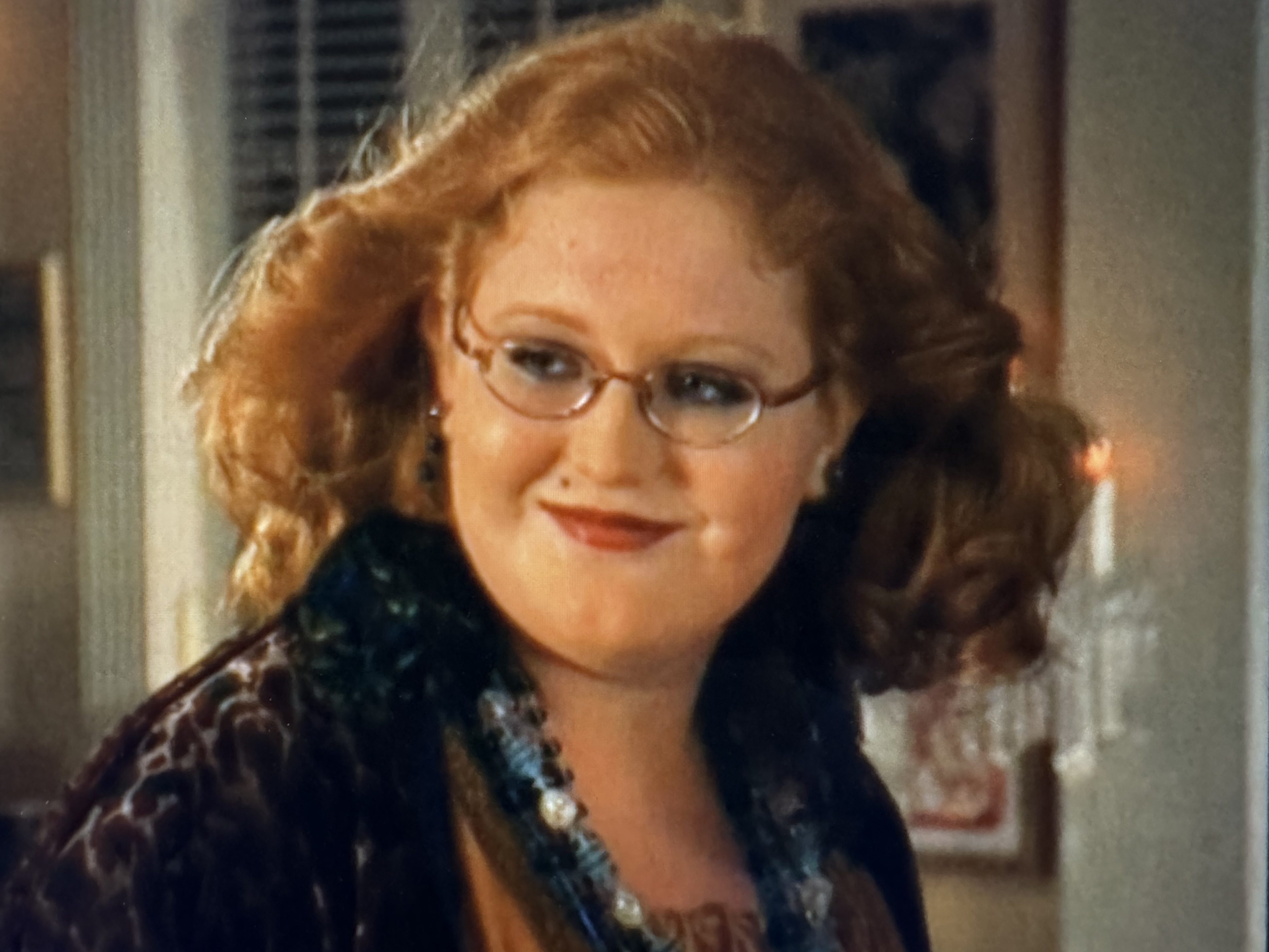
The episode “Clue-less,” the murder mystery party episode, I think that’s such a fun adventure that brings out such great acting from all of you. Your costume in that episode is fabulous. You really own this vintage look. And you have this special moment with Larry.
Oh, the hair toss!
What stands out to you now about working on that episode?
As a theater teacher, I totally appreciate all the fun costumes and stuff. I love doing costuming. I wish I had more time as a theater director. When you teach high school theater, you’re wearing all the hats. You are the entire production team, on top of being the director and the teacher.
I enjoyed that episode because I felt very special in that episode. I felt like my character was a really integral part to the storyline. I mean, I was part of the storyline for “Dear Lizzie” because, obviously, her advice winds my character up in trouble, and it kind of teaches her part of her lesson. But [“Clue-less”] was, I think, the first episode where I felt like I was really a part of the story in a very meaningful way. I was an active player in the game as opposed to a side character. That was very, very cool.
[Kyle Downes] who played Larry, he was a really nice guy. But he was also much, much older than me. You do what you’re paid to do. You do the hair toss, you look really sultry. I knew what they were going for. I remember the words being like, “the Baywatch hair toss.” I’m 15, I’m 14. I’m supposed to know what that means? It’s not like [an age gap] wouldn’t happen today, necessarily. I wouldn’t say that it made me feel uncomfortable or anything. Nobody pushed me to do anything that I was uncomfortable with. But it’s just kind of interesting, I’m going to flirt with a 20-year-old today and wear a pretty sparkly dress and a weird turban. Alright!
But, it was a really fun shoot. I think it was one of the times where I kind of felt like part of the gang, because in other episodes, I came in, I would work for two or three days, and then I would go. We would all have school in the same classroom and things like that. I remember [Ashlie Brillault, who] played Kate was really nice. She was really sweet, and she would talk to me and engage me. I don’t necessarily say that anyone ignored me, but I didn’t necessarily feel from the main cast a lot of, like, Oh, hey, you’re here! You’re with us for the next couple of days. Let’s hang out. Let’s have lunch together. Let’s have a conversation when the camera is off. I feel like “cordial” makes it sound too cold. It was just very professional, working together, as opposed to “we’re buddies” type of environment.
Whereas you had an episode of Lizzie where you were bullied, on Phil of the Future you portray a bully. And I can’t help but think sometimes, as much as I love Disney Channel shows and enjoy writing about them and rewatching them, that the writing and presentation of bullying isn’t always as nuanced as it could be. I don’t know what your read on that is, looking back on it.
Well, I think that’s a fair assessment. It’s just very, like, “big mean kid” does “big mean kid” things for no real reason other than they are “big mean kid.”
I think that’s kind of the bully story, really. And I’ve played that character before. I did that in Hope Floats. I went out for a lot of bully characters after that, so I don’t disagree. I am sure that [my Phil character] had other things going on in her life that made her want to steal people’s sandwiches.
How did you decide to pursue your degrees and your teaching credentials around that time?
Being on set and doing that was really fun, and I enjoyed it, but I got a lot out of my high school English courses. I really enjoyed literature. I really enjoyed reading and studying. I was very very involved in my school theater program. I got to play the leading role in the musical my senior year. It was a very High School Musical thing. I do like doing film. Film is awesome, but I really loved doing theater. There was something about, you had to rehearse it until it was perfect, because you’re going to do it in front of a live audience, and there’s no going back. If you mess it up, you’ve got to find a way to make it work. It’s just a different experience than shooting the same scene over and over for two hours and shooting things out of order. That is its own unique challenge. That’s one of the things that I teach in my class, is that film acting and theatrical acting are very different.
Being in high school theater was a place where a weird, freckle-faced, redheaded, chubby girl could be the leading lady. Once you kind of grow out of your cute, Disney Channel, Nickelodeon age, I didn’t necessarily feel like I was going to get to do the things in film that I wanted to do as a performer. I think that is still the thing, and I talk very openly with my students who don’t look like Hilary Duff about what to realistically understand and expect from trying to make a career out of being a performer. And there are wonderful performers out there who are unique and different and don’t fit a Barbie cookie-cutter thing that make wonderful careers as character actors and all that. [But there’s a] suspension of disbelief [in theater] that anybody could be the star.
Even in the theater world, it’s not there yet. But I think we’re getting more progressive in the theater world than we are in the film world. That was a meaningful thing to me, and I wanted to feel like I could give that back to somebody else.
So I thought realistically about my options. I could either be a character actor and maybe have a chance at making a good living for myself playing kooky, goofy characters, or I could work with kids and give them that sort of experience where they can train as performers and feel like they’re part of that next group that’s going to be the decision-makers. The kids I’m working with now, hopefully they’re going to be the producers. They’re going to be the next people that decide, like, Well, yeah, why can’t Ariel be Black? Why can’t a girl who wears a size 20 be the love interest? Why can’t the skinny Asian guy be the main character?
Looking back on your experience and your knowledge of the industry, and working with kids yourself, what do you think the future of children and entertainment should be, or if on screen there should be a future at all, given some of the things we’ve learned?
I think that there’s going to always be a need for kids’ content, and kids want to see themselves. There have to be protections in place. Now we’re getting into this world of intimacy directors and having intimacy coordinators. I feel like it would be ideal to have child coordinators, people who, their specialty is working with and protecting children. I very much valued my experiences as a performer. And there were also things that, to be perfectly frank, f–ed me up as an adult. When I was the tiniest my body ever was doing George Lopez, where the whole episode was about making fun of my body, and making money off of letting people make fun of my body, it got me to college. It got me a nest egg and things that are valuable. I don’t look down on the adults in my life who allowed me to participate in that, because I think we’re all coming from a space of, I don’t know if we all knew any better.
Nobody wants teenagers to play teenagers because we can play 20-year-olds [as] teenagers and work them 18 hours a day. So I got to a point where I’m like, Well, I don’t want to keep doing these parts where my main purpose as a performer is being made fun of for being in a bigger body, and I couldn’t do any more adult work than that. I told my manager, “I’m not going to go out for these parts anymore. I’m done. I’m done with doing that. Don’t send me out for these parts.” My work dried up. That’s problematic in and of itself, when you’re telling a girl who’s wearing a size ten pants that there’s no work for them other than to be made fun of publicly on national television.
Friends was a valuable experience because that’s why people remember me. But that was really hard for me because I was 14, and I had just lost 30 pounds, which is this whole other animal of talking about why does a 14-year-old feel like they need to lose 30 pounds? But here we are. They wanted to put me in this dress and put a padded butt and padded hips on me. The whole joke of the episode is, Oh, I’m hurting a grown man’s feet by dancing on his feet. That’ll f— you up when you’re 14. It was a meaningful experience. It’s a really nice feather in the cap on my résumé. I was treated really nicely and really respectfully. Jennifer Aniston, in particular, we didn’t have any scenes together, and she went out of her way to come talk to me and be like, “Oh, you’re so funny. I’ve been watching you on set, and I was just telling my husband that they have this girl on set right now, and she’s super funny.” 11:00 at night, we’re going to leave ’cause I’m done. She’s like, “No, no, no, you’ve got to stay for the bows. You’re so funny. Don’t go.” I didn’t have any scenes with her. She didn’t have to talk to me. The other two women didn’t talk to me. The guys talked to me ’cause I had scenes with the guys, and they were sweet and they were funny.
I don’t know if I, as an adult, would be okay with my daughter booking that. But I’m not mad at my parents, because they never pushed me to do anything I didn’t want to do. I wasn’t one of those kids where my job as an actor was feeding the family. I’d like to see a little more thoughtfulness and care; somebody on set [to say], “Actually, from a child psychology standpoint, that’s f—ed up. Let’s not do that.” Kids need to see themselves. Kids need to see that there are Filipino kids and Black kids and Latino kids and South Asian kids and big kids and small kids and tall kids and short kids and fat kids and skinny kids, and they need to see all of them in the context of being part of a story where that’s not the story.
Yeah, that’s so important. It’s just taken too many years to say, Oh, wait, that wasn’t funny. We shouldn’t have been laughing at scenes like this and characterizations like this. And we can do so much better to write real humor and tell stories that show kids versions of themselves, but that are compassionate and true representations of people.
And I’m not saying everything needs to be “kumbaya.” It’s on my mind because we’re doing The Little Mermaid, but last year, when the Little Mermaid [live-action remake] was announced [starring] Halle Bailey, the collective Internet lost their freaking mind because apparently a Black mermaid is just too much. I’m like, No, I want more Black mermaids. I want fat, Black mermaids. I want gay, fat, Black mermaids.
I want so much more of that for my daughter, and I do try to curate her content that she’s watching. It is important to me that with the screen time that she gets that she’s seeing different bodies, different races and communities and orientations of people in her content. A lot of her content right now is Mickey Mouse. She really likes Mickey Mouse Clubhouse right now. There’s content that I have said, Nope, we’re not watching that. We don’t do Peppa Pig in my house because Peppa is mean to her daddy and fat-shames her daddy.
A lot of the kids I teach are never actually going to go into the film and television industry. But for those who do, who might, I’m hoping that they have a different perspective and that that’s going to change perspectives. It’s going to be a long road, though. Those are hard things to overcome.
Do any of your students go find you on Disney+ and then come back and tell you?
Yeah, they do. Sometimes they’re like, Oh, Miss! I noticed that! And I’m like, Cool, cool stuff. Anyway, so Shakespeare said… I try not to entertain it too much.
Thank you for reading my conversation with Rachel Snow-Fornari. I invite you to get involved if you are looking for ways to support arts education. Alhambra High School is a Title I school with a fully self-funded theater program. Readers are welcome to donate to the program here and purchase tickets to their April production of The Little Mermaid here. With any questions about how to get involved and volunteer your expertise or other resources, email moorstheaterboosters@gmail.com.
 Past Foot Forward